
Archbishop Emeritus Chacour (Abuna) has made an incredible offer to those considering joining our Living Stones Pilgrimages — Abuna will travel with the group for three days when touring Holy Sites in the Galilee! He will help interpret the sites based on his deep and lived knowledge of the Bible.
Many pilgrimages to Israel and Palestine have shifted their focus from holy site excursions, spiritual journeys, and even from the social justice talking tours, to more experiential opportunities to listen and stand in solidarity with Palestinians.
Experiencing Palestine is critical to provide support to Palestinians on the ground, who are experiencing escalating attacks on their existence and livelihoods. Our pilgrimages give people a window and platform for their voices, and we support their resilience in the face of extreme economic violence.
Visiting Palestine sends a crucial message: Palestinians are not alone.
You can make a difference while experiencing the beauty and wonder of the Holy Land:
[Pilgrimage fee does not include: Flights, visas, passport fees, travel insurance, excess baggage, and personal purchases]
Find a detailed itinerary for the November pilgrimage at this link and an application and information packet will be available shortly. (The April 2027 pilgrimage will follow a similar itinerary)
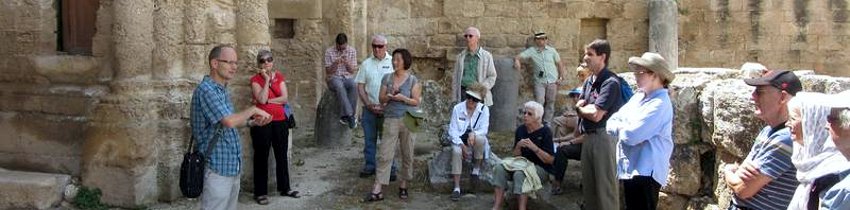
This trip is designed as a hybrid including traditional Living Stones Pilgrimage and a solidarity and witness tour to include visits to Holy Sites, Peace Partners, and peace-builders whose expertise will shine a light upon the changing geopolitical and theological landscape most recently as well as historically.
We will visit Mar Elias Educational Institutions a unique school that incorporates the values of inclusion, dignity, forgiveness and reconciliation as an integral component of the curriculum.
As a bonus — Father Chacour will join the group for three days visiting Holy Sites in the Galilee — a rare opportunity to be in his company as he shares the treasured jewels of his homeland with us.

Jesus said “I was in prison and you came to me.” This is not a metaphor. It is a command. It is a glimpse into the kind of love that reflects the heart of God—one that sees Jesus not in comfort or power, but in those that are forgotten, confined, and condemned.
Today, that prison has a name. For many, it is Palestine.
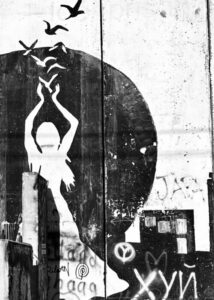
Under decades of military occupation, millions of Palestinians live behind walls—some literal, some “legal”, but all unjust. An untold number of Palestinians are held in Israeli prisons, many without charge or trial. Children are taken from their homes in night raids. Families are separated. Checkpoints divide cities and lives. Gaza is under siege. The West Bank is next and is fractured by settlements and military control.
To visit Palestine is not simply political—it is profoundly Christian.
It is to say, “We see you. You are not alone. Your suffering matters.” It is to obey Christ, who identifies not with the powerful, but with the persecuted. It is to enter into a place the world avoids and to find Jesus waiting there, in the faces of the afflicted.
This is the time for the Church to rise in faithful witness.
We are not called to passive prayers alone, but to active presence. Jesus does not ask, “Did you agree with their politics?” He asks, “Did you visit me?” The people of Palestine—especially those in prison, under siege, or crushed by occupation—are calling out. And Christ calls us through them.
Let us cross the checkpoints, sit with the families, visit the prisoners, walk the refugee camps, and listen to the groans of the land. Not to fix—but to witness. To weep. To stand. And to love, as Jesus loved.
Because when we go there, we go to Him.