

Reflections on Education, Belonging, and Living Across Difference
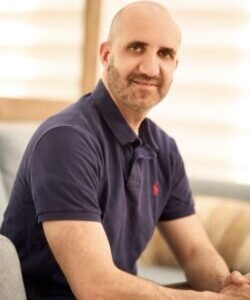
Dr. Emil Halloun, Director of International Relations at MEEI
In many parts of the world, societies are still trying to understand how people of different religions, cultures, and historical experiences can live together without reducing difference to a problem that must simply be managed. The challenge is not only how diversity can be accommodated, but how it can become part of a shared life rather than producing parallel communities that occupy the same geographical space while remaining socially distant from one another. At the Mar Elias Educational Institutions in Ibillin, these questions are not abstract. They have formed part of our everyday institutional reality for decades, and this long experience may have something to contribute to a conversation that has become increasingly urgent far beyond the Galilee.
What has always interested me increasingly is not multiculturalism as an ideal in itself, but the more demanding question of how difference becomes livable within the ordinary structures of an institution. At MEEI, Muslim and Christian students study together, while Muslim and Christian teachers share responsibility for the same educational community. We are also grateful to have Jewish teachers among our truly extraordinary teachers, and we hope that their numbers will grow. We continue to hope, despite the current surreal circumstances, that one day Jewish students will become part of our campus community as well. This aspiration matters because the vision of Mar Elias has never depended upon sameness. Its significance lies rather in creating a form of belonging in which religious and cultural identities remain visible without becoming barriers to common life. This aspiration also recalls one of Father Chacour’s characteristic formulations: we want peace, and we refuse to be reduced to pieces.
MEEI does not offer a formula that can simply be exported elsewhere, and it would be too easy to present our experience in such terms. Our reality is far too complex for that. What MEEI does offer, however, is something more valuable: decades of accumulated experience in sustaining a shared educational community without requiring its members to surrender their identities. Coexistence is often discussed through dialogue projects, conferences, annual celebrations, or symbolic encounters, all of which have value. An educational institution, however, tests coexistence in a more demanding way because people must teach together, plan together, solve practical problems together, educate young people together, disagree together, and pursue common goals together. The credibility of shared life is, therefore, examined not only in moments explicitly devoted to coexistence, but through the ordinary work of an educational institution. In Father Chacour’s words, together we are stronger than the storm. This spirit is also captured in a guiding principle close to Mar Elias: the most valuable among us is the one who is most pious.
A recent achievement by our high-school students illustrates this point particularly well. A group of Muslim and Christian students distinguished themselves in a national physics competition after working together toward the same demanding academic goal. Their success was, first of all, a success in physics, and this is precisely what makes the example significant. The students did not come together in order to perform coexistence or to participate in a project devoted to interreligious dialogue; they came together because they shared an intellectual challenge, responsibilities toward one another, and the desire to succeed. In such moments, difference does not disappear, but neither does it determine the limits of cooperation. It becomes part of a shared educational environment in which achievement, responsibility, and friendship can take precedence over inherited boundaries.
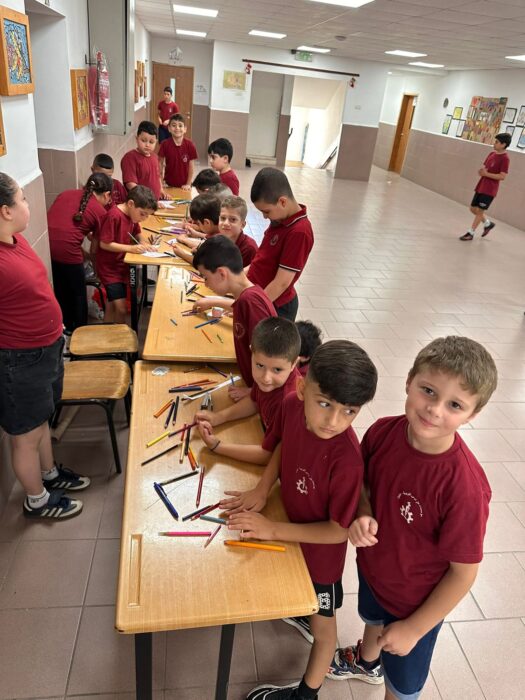
This may be one reason the experience of Mar Elias deserves attention today. It has developed under conditions that are anything but ideal. Our region has been marked by conflict, inequality, political tension, and, especially in recent years, the painful consequences of war. Yet the institution has continued to insist that another kind of relationship remains possible. Many Jewish visitors come to Ibillin and to MEEI each year, where they walk through the campus, visit the Church of the Sermon on the Mount, meet members of our community, and encounter a place in which they are welcomed and feel safe. These encounters may appear modest when placed beside the larger political problems surrounding us, but they should not be dismissed, because trust is often built through precisely such ordinary experiences of hospitality and human contact.
It’s worthwhile to mention that Ibillin itself provides an important context for this work. Muslims and Christians have lived alongside one another here for generations, and the village continues to possess a strong social fabric. This reality should not be romanticized. Like many communities in Arab society, Ibillin has also been affected by violence, and some families have suffered painfully from it. That reality must be acknowledged without hesitation. At the same time, it is equally important to recognize the social, educational, cultural, and civic initiatives that continue to bring Druze, Muslims and Christians together throughout the year. Such encounters are not limited to Christmas, Eid al-Adha, or other symbolic occasions, but form part of the ongoing life of the village. MEEI has contributed quietly but significantly to this social fabric, not through grand declarations, but through years of daily educational presence, relationships, and shared responsibility. The connection between MEEI and the local society of Ibillin is hence deeply interconnected: the institution has been affected by the village, while at the same time contributing to the patterns of trust, encounter, and cooperation that help sustain communal life. A shared society cannot depend solely upon ceremonial moments; it must become part of the habits, responsibilities, and relationships of everyday life. This daily work also asks us to look again at the person we call “the other” and to discover that the other may, through encounter and relationship, become a brother.
I was reminded of this notion of encounter recently while attending an academic conference in Germany, where one of the sessions addressed multiculturalism and the challenges facing contemporary societies. During the discussion, I shared aspects of the experience of Mar Elias with the scholars present, and the conversation led me to reflect on the direction in which knowledge about coexistence is often imagined to travel. We tend to assume that models, theories, and solutions are developed in European or other major intellectual centers and then applied elsewhere. Yet there are experiences developed in the Galilee, under difficult and imperfect conditions, from which wider discussions of multiculturalism may also learn. Mar Elias should not be presented as an idealized model, but its value lies precisely in the fact that it is a living and, I would add, an unfinished institution, one that continues to negotiate difference under pressure rather than merely celebrate it in principle.
It goes without saying that, for me, this experience is also deeply connected to the Christian roots of MEEI and to the vision of Archbishop Elias Chacour. The language of Christian charity can easily become sentimental if it is reduced to kindness or goodwill, whereas caritas can be understood more rigorously as a mode of relation. It asks us to resist reducing another person to a category, an identity, a fear, or a political position. It does not require the disappearance of disagreement, but it does require a refusal to allow disagreement to exhaust what another person is. At its best, MEEI has translated something of this Gospel understanding into educational practice, not as a slogan but as a pattern of institutional life.
This is why MEEI continues to be relevant, and our work is also continuing in new ways. In summer 2027, the Mar Elias Educational Institutions plan to launch the first International Summer School in Ibillin, with further details available at this link. The Summer School grows directly from the conviction that the experience of the Galilee has something to contribute to wider conversations about language, identity, religion, and shared life. It will combine the study of Arabic language and culture with opportunities to encounter the complex religious, historical, linguistic, and cultural life of the region. Participants will not simply study Arabic in a classroom, but will meet communities, visit places of significance, experience local culture and hospitality, and encounter the Galilee through the people who live within it.
The program will be open to all participants, including university students, educators, clergy, researchers, and scholars whose work may be enriched by closer engagement with the Galilee and with Arab society in Israel. We hope that participants will return home with better Arabic, but also with new friendships, more difficult questions, a deeper understanding of this land, and perspectives that cannot easily be gained through books, headlines, or distant observation. In that sense, the purpose of the Summer School is not solely linguistic. It is also intellectual and human, and we hope that those who participate will not return home exactly as they arrived.
For our friends abroad, solidarity with MEEI means, thus, more than helping an educational institution survive. It means remaining connected to a community in which this demanding form of shared life is still being attempted every day, and helping to sustain an institution that has spent decades learning how difference can remain visible without becoming an obstacle to belonging.
We all remain grateful for your continued support,
Emil